Choosing a Material for Your Pool Fence
Every material below can be built to the city's pool barrier rules. The choice mostly comes down to how you want the pool to look from the house, how much of a view you want through the fence, and how much upkeep you're comfortable with.
Aluminum and Wrought Iron
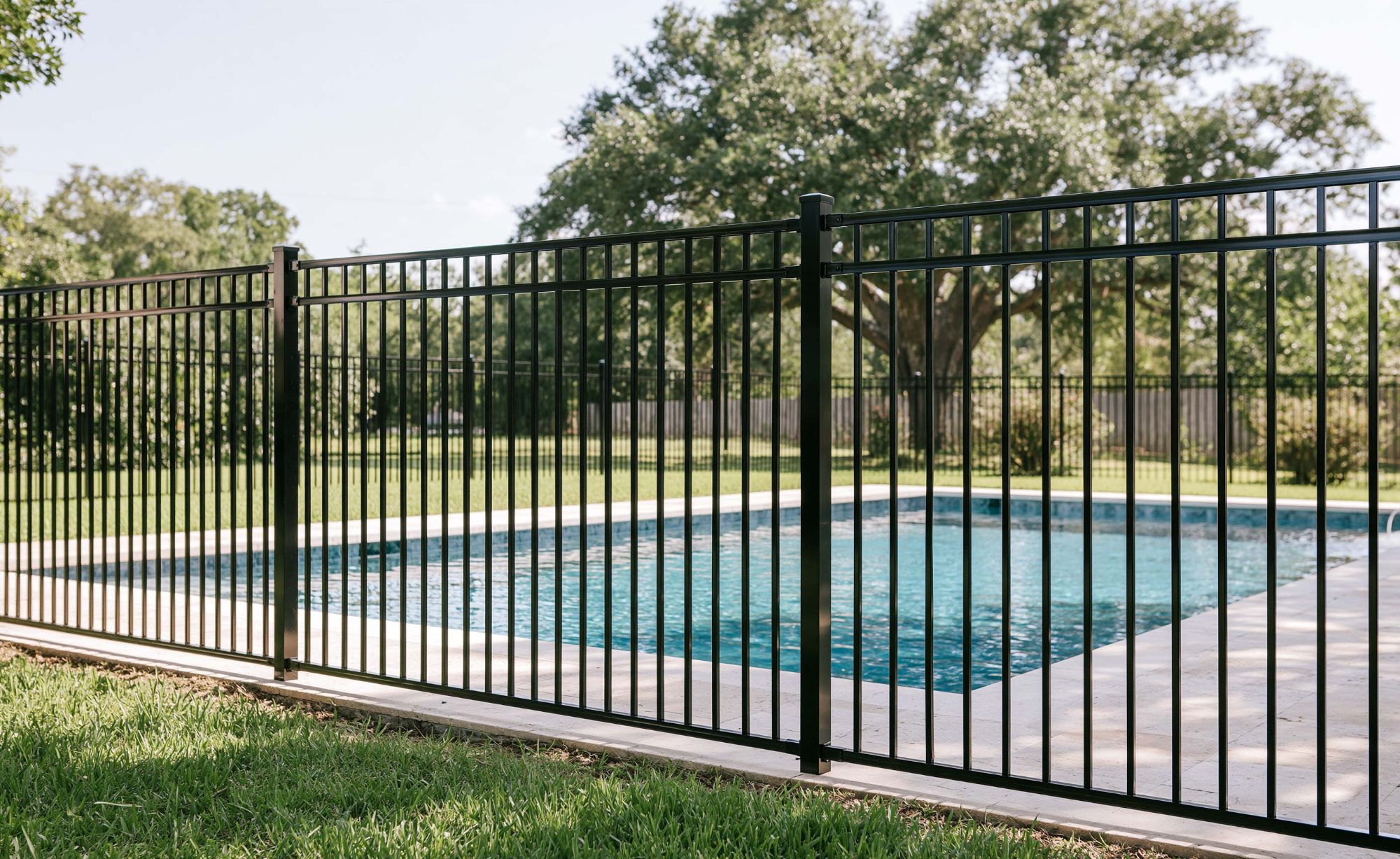
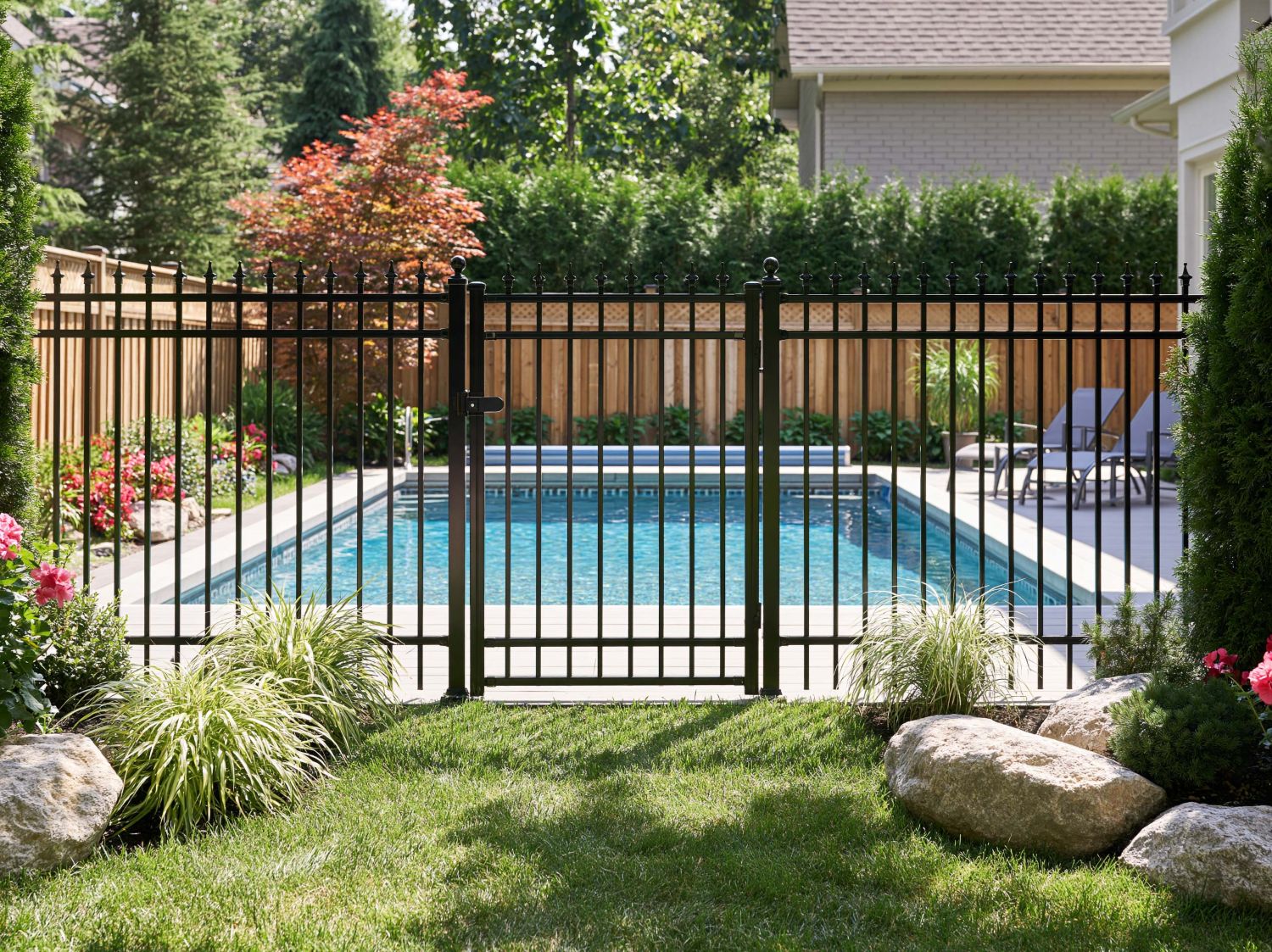
Aluminum is a common choice around pools. It doesn't rust, it's light enough to keep the gates easy to swing, and a black aluminum fence lets you see the water from the house without much getting in the way. Wrought iron gives a similar look with a heavier, more traditional feel. It's strong, and like any iron it needs a touch-up of paint from time to time to keep rust away.
Vinyl and Glass
A vinyl pool fence can give you a solid wall of privacy around the pool and doesn't need painting. Glass goes the other way: clear panels that leave the view of the pool open from every side, and they come framed, semi-frameless or frameless.
Chain Link
If you already have chain link in the yard, or you want a practical fence for a side yard that runs past the pool, chain link can be part of a pool barrier at a house here, with the smaller openings covered above. Black chain link blends into a green yard better than bare metal does.
Mesh Pool Fences
Mesh pool fences are the panels of tight netting on poles that set into sleeves around the deck. The city has its own rules for them: the bottom of the mesh can sit no more than 1 inch above the deck or the ground, it can't be lifted more than 4 inches from it, and a 4-inch ball can't pass under any panel. A mesh fence also has to meet the city's definition of permanent, so a system whose sections lift out by hand isn't the same thing as one that needs a tool to take down. On a new pool, the inspector makes the call at the final inspection, and we'll go over which kind you're looking at before you choose.
A pool at an apartment complex, a condominium or an HOA amenity center goes by a different set of rules under Texas law. Those are on our commercial fencing page.